Should-Cost in Action: How to Use Cost Intelligence in Supplier Negotiations

Too often, supplier negotiations follow the same script: a quote lands, you think “that seems high,” and the conversation turns into a debate where each side argues based on past costs and personal goals. The whole experience boils down to price haggling and lots of coffee to maintain your sanity.
Should-cost analyses change that. Instead of reacting to a price once it lands in front of you or struggling through tense negotiations, you can get real intelligence into what a product should cost based on real price drivers like materials, labor, overhead, and selling, general, and administrative expenses (SG&A).
While your should-cost model won’t win the negotiation entirely on its own, it makes a huge difference in guessing versus knowing the true costs of your supply chains. Knowing puts you in a much better position to negotiate from.
A should-cost analysis is a bottoms-up estimate of what a product should cost to make—decomposed into materials, labor, overhead, and margin—that gives buyers an evidence-based reference point to negotiate against, rather than arguing from last year’s invoice.
In this blog, we’re breaking down:
- Why supplier negotiations stall and where should-cost intelligence makes a difference
- Where your suppliers hide their margins and how should-cost models expose them
- How to prep and present should-cost data for transparent negotiations
Why Supplier Negotiations Stall
Supplier negotiations stall when the buyer has a price to react to but limited data to argue from. Price pushback ends up being based on instinct and historical spend instead of evidence.
Three Reasons Negotiations Go in Circles
If you find yourself going back and forth with suppliers on their proposed invoice, it’s probably because:
- You have a price but limited cost structure. The supplier’s quote tells you what they want to charge. It says nothing about which cost category moved or by how much.
- Your supplier controls all the cost information. It’s not like they’re offering up their own cost data, so all the facts sit on one side of the table.
- Pushback is relational, not evidence-based. Your instincts and a general industry benchmark don’t go too far at the negotiation table. Without data about specific price drivers, the conversation focuses on who can argue their own feelings more strongly.
On the contrary, should-cost analyses drive supplier negotiations forward.
How Should-Cost Models Change Supplier Negotiations
Because should-cost models show you exactly where costs come from, the inputs that drive prices, and how much costs can change based on different scenarios, they reframe supplier negotiations from “Is this price fair?” to “Here’s the gap and what’s causing it.”
They also compare your quoted price to the landed cost so you know if you’re:
- Overpaying, because the quoted price is significantly higher than the landed cost
- Paying a fair price, because the two are relatively close

With that cost intelligence, you have real figures, down to the dollar, that you can use to have your suppliers explain the itemized difference between the landed cost and their quote. That makes the conversation structurally different from the ones you were having before.
Turning a negotiation into itemized fact only works if you know which items to look at.
Where Price Gaps Are Hiding (and How Should-Cost Finds Them)
Price gaps often hide in the cost categories you’re least equipped to independently verify.
Those can include:
- Inflated overhead and burden rates: A generic 80% burden rate applied to a highly automated line that should run closer to 35%.
- Stale material pass-throughs: Charging today’s price increase on a direct materials cost from six months ago instead of the current market rate.
- Bundled freight and tariff padding: Landed cost line items combined into one number so you can’t tell if the tariff share is accurate.
- Generic labor-rate assumptions: Applying a national average wage instead of the regional rates for the plant doing the work.
- SG&A creep: Administrative and overhead costs that quietly bleed into the “price of doing business.”
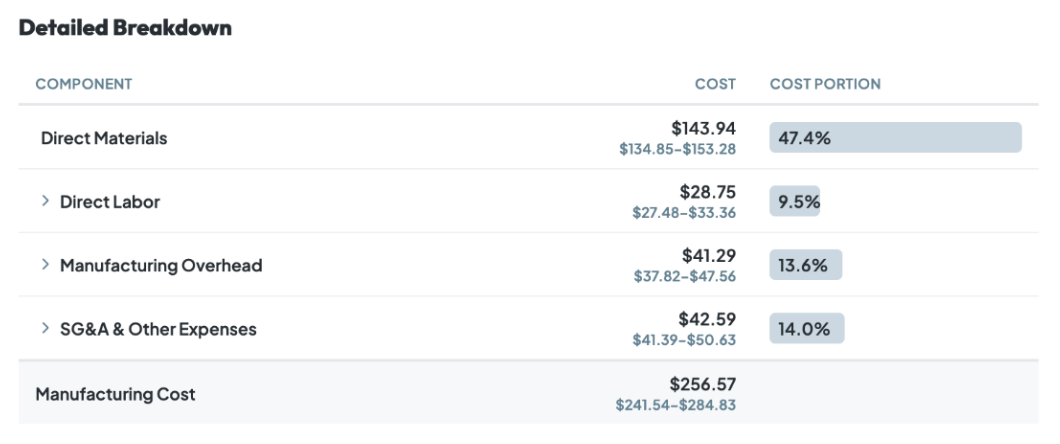
Important: If, when you pull a should-cost analysis, you find price hikes hiding in these areas, it doesn’t mean your supplier is trying to take you to the cleaners. It’s just what happens when you don’t have engineered data to check their math. That’s what should-cost models fix.
The Bonus Tier 2 and Tier 3 Issue
A lot of these hiding places don’t always originate with your direct supplier. They may look new to you, but, most times, they’ve been lingering in your Tier 2 and Tier 3 supplier base for weeks. It’s why a lot of margins and vague price “justifications” get accepted during negotiations.
If you only have should-cost data about your direct suppliers, you’re still playing a guessing game. You need intelligence that extends to Tier 2 and Tier 3 supplier cost structures to have real negotiation leverage.
Once you have your models ready, there are several things you should do before you start using them with suppliers.
Preparing to Negotiate with Should-Cost Data
While you can get should-cost data for every SKU within your supply chain, it doesn’t mean you also have to negotiate each one. A little due diligence and strategy goes a long way in ensuring you use your models and efforts wisely.
1. Prioritize Gaps That Really Matter
Before you request a supplier meeting or heavily push back on a new quote, rank your SKUs by two things:
- The size of the dollar gap between the quoted price and should-cost
- The volume or strategic weight of that product
A $30 gap on a low-volume component isn’t necessarily worth the relationship friction. A $230 gap on a high-volume SKU is.
2. Bring the Right People into the Room
Should-cost negotiations land better when you involve the people who work with those products. Have a short prep session with:
- Finance, to confirm the business case for certain negotiations
- Research and Development, to get their feedback on necessary components and their ideal budget
- Risk Management, to check their priorities and biggest concerns
In doing so, you turn the negotiation process, and the points you argue, from just “procurement priorities” into a cross-functional position that everyone is behind.
Once you have your strategy set, you’ll want to approach your suppliers with the same level of care.
How to Present Should-Cost Data Without Damaging the Supplier Relationship
You should treat should-cost supply chain data as a starting point for a transparent dialogue, not a hard-and-fast verdict. To avoid causing too much friction with your suppliers, present your cost intelligence in a way that lets everyone explain their thinking.
Lead with Curiosity
Don’t sit down at the negotiation table and immediately accuse your supplier of overcharging you. That’s a sure-fire way to make any conversation feel hostile. Instead, say something closer to “Here’s what our model shows for this SKU. Can you walk us through where you’re seeing it differently?”
You’re still presenting the same data, but you’ve started a completely different conversation.
Follow the Rules for a Productive Should-Cost Conversation
To keep the conversation open and transparent, keep to these guidelines:
1. Show how you got the number
Throwing a number at your supplier feels like an attack. Demonstrate the specific commodity indices, labor benchmarks, and overhead assumptions that went into arriving at your should-cost number.
2. Let suppliers explain their figures
Most times, there’s a legitimate reason for the difference between what a supplier quotes you and the landed cost, be it capacity constraints, a shift in freight mode, or something else. Give them a chance to walk you through their own numbers before you draw conclusions.
3. Acknowledge value the model can’t fully capture
There are real costs that a bottoms-up model won’t always show, like tooling investments or IP your supplier has spent years building. To keep your supplier’s trust, leave room for that context as you negotiate price.
4. Anchor asks to specific SKUs
Telling your supplier that their margins are too high across the board invites a defensive, all-or-nothing response that can ruin the entire relationship. On the contrary, identifying a gap for certain line items allows for a specific, answerable conversation. Choose the latter.
Give Your Supplier Room to Respond
Even when your supplier feels your should-cost model justifies a price change, don’t expect them to concede in that very same meeting. Most sales reps don’t have the authority to reprice on the spot, so they’ll need to take the cost data that you presented to their own leadership first.
To that end, go in knowing that your follow-up meeting is where the real negotiation will happen.
Turn the Model into an Ongoing Mechanism
In the same way that year-old spend data doesn’t give you any information or context about current price drivers, neither does a six-month-old should-cost model. Make sure your supplier knows that your analysis updates with the market rather than only when you want a better price.
That alleviates any concerns that the models are a negotiation trick and instead positions them as a transparency driver for future pricing conversations.
Frequently Asked Questions About Using Should-Cost Analyses in Supplier Negotiations
1. What are should-cost analyses used for in supplier negotiations?
Should-cost analyses give buyers an objective, itemized breakdown of what a product should cost based on materials, labor, overhead, and margins. Pushback on a supplier’s price becomes grounded in specific cost-category data instead of a general sense that the price feels high.
2. How often should you update a should-cost model before a negotiation?
As close to the negotiation date as possible, but they should be updated each month to remain current. Commodity prices, tariff schedules, and regional labor rates can shift in weeks, so a model built on data that’s even a quarter old can misstate the actual gap in either direction.
3. Does should-cost analysis hurt supplier relationships?
Not when it’s presented as a starting point for dialogue rather than a final number. Framing the model as “here’s what we’re seeing, walk us through the difference” keeps the conversation collaborative. Framing it as a take-it-or-leave-it demand is what damages trust.
4. What if the supplier disagrees with the should-cost number?
That disagreement is useful information, not a failure of the model. It can reveal a legitimate cost driver the model didn’t capture—like a recent input spike or a tooling investment—or it can reveal where the supplier’s pricing doesn’t hold up to scrutiny. Either way, you learn something you didn’t know before the conversation.
5. Can should-cost analysis validate a price increase, not just challenge it?
Yes! And this is one of its most underrated uses. When the model confirms a price increase matches real cost movement, it builds credibility for the process, strengthens the supplier relationship, and gives procurement a defensible answer for Finance and leadership.
How Dalinea Builds Should-Cost Models You Can Bring to the Table
Dalinea is the AI-native, multi-tier cost intelligence platform that tells you what your products and materials should cost. We take a true bottoms-up approach, building cost breakdowns from the component level up, the way a cost engineer would. But we do it at a speed and scale no team of analysts could touch.
Every should-cost model traces cost signals through Tier 2 and Tier 3, runs 1,000+ simulations per analysis, and decomposes 12+ cost drivers based on:
- 140+ countries
- 1M+ economic data points
- 40+ authoritative datasets
We don’t simply show you how a supplier’s input costs moved. Our should-cost models quantify the exact dollar exposure of every SKU, where it came from, and what that movement means for your unique supply chain.
Don’t just take your supplier’s word for it. Know what it should cost with Dalinea.